DEDICATION

We are dedicated to provide our pupils with modules, tips and answering technique

COMMITTED

To provide our pupils withe the best modules available

COMPLEMENTARY

Providing pupils with lots of helpful complementary exercises and modules

SUCCESS

Committed to bring success to our pupils

FREE

All our modules, tips n tricks and techiques are free for all to use

Showing posts with label Pembelajaran Abad ke 21. Show all posts

Saturday, 12 March 2016

PROJEK INOVASI PANITIA BAHASA INGGERIS: THE FI3 TAB

Panitia Bahasa Inggeris SK Felda Redong, atas inisiatif guru-guru panitia, telah banyak menghasilkan inivasi-inovasi pendidikan yang bertujuan untuk menjadikan P&P Bahasa Inggeris lebih menyeronokkan. Antara projek inovasi yang telah dihasilkan ialah The Fi3 Tab - Substitution Tablet. Ia merupakan adaptasi tablet touchscreen, dimana bahan ini seolah-olah tablet sebenar kerana pelajar boleh skroll soalan dan perkataan seolah-olah ianya menggunakan touchscreen.

Substitition Tab ini digunakan sebagai inovasi menggantikan substitution table yang biasa digunakan untuk membuat ayat dengan pelbagai pemboleh ubah. Uniknya tentang substitution tablet ini ialah, ia membantu pelajar membina 4 jenis ayat (past, present, past continuous dan present continuous).

Ia sesuai digunakan sebagai latihan untuk pelajar membina ayat untuk 4 jenis tenses, dimana sedikit sebanyak membantu untuk penulisan karangan di dalam peperiksaan UPSR. Ianya juga sesuai untuk dijadikan bahan self-access learning kerana pelajar boleh menyemak sendiri samada ayang yang dibina betul atau pun salah, melalui grammar checker table yang disediakan.

Inovasi ini telah memenangi Anugerah Guru Inovatif Daerah Segamat pada tahun 2014 dan Anugerah Gangsa Pameran Inovasi MOSTI/JPN Johor Kategori Individu pada 2013. Juga menerima jemputan ke pameran inovasi kebangsaan pada tahun yang sama.


Skrol ke kiri atau ke kanan untuk memilih soalan kepada ayat yang hendak dihasilkan.


Contoh untuk memilih perkataan untuk dijadikan ayat. Skroll ke atas atau ke bawah untuk memilih perkataan.


Gambar-gambar aktiviti penggunaan Substitution Tablet di dalam kelas.


Perbincangan di dalam kumpulan untuk menghasilkan ayat.


Pelajar membuat pembentangan ayat yang telah dihasilkan. Tablet ini mempunyai lebih 300 kombinasi ayat.


Guru menunjukkan cara bagaimana penggunaan tablet ini dan bagaimana menyemak ayat yang telag dibina.


Ayat yang dihasilkan pelajar di dalam kelas


Contoh substitution table tradisional yang digunapakai zaman dahulu.

Laporan disediakan oleh:

Cikgu Zalman Fitrie Bin Othman
Panitia Bahasa Inggeris
SK (Felda) Redong


Thursday, 11 February 2016

JOURNAL BOOKLET FOR BOYS AND GIRLS

This journal booklet, is a great initiative to replace Parking Lot Corner in classroom.Why? Because it is more personal, pupils have the power to write everything in this journal (even it is a secret) and no other pupils will be able to read, therefore avoiding mocking and develop self-confident among those who are pretty reserved and shy in the classroom.  Beside, most teachers don't really understand the purpose of parking lots and I hope this helps, and pupils can't really write their feelings because if the idea where other pupils might read them (privacy issues). Apart from that, this journal booklet comes with Student-Teacher Agreement form that will make the pupils feel more in charge and have the authority of themselves. 

Read 5 reasons to write journal below to understand why journal writing is good for your children. This journal is structured and guided and pupils can either write or sketch their feelings or what they've learnt that day. Teachers don't evaluate or marks this journal, but rather get insight of what their pupils think or feel. Click on pictures of Journal For Boys or Girls to download - Cover just to differentiate, but content is the same. 


Journal for Boys


Journal For Girls


5 REASONS TO WRITE IN JOURNALS

Builds Student Confidence

• Struggling writers absolutely must have opportunities to build their confidence in their writing skills. If they are assessed on every piece they write, they won't want to take risks.
• Don't we want our students to apply what we teach them? Of course, and they need practice time without recrimination. Present a mini-lesson on one specific skill before you begin your writing sessions, encourage the students to apply the skill, and then step back and allow them to try.
• Research shows it takes at least 28 repetitions of a concept or skill before it is actually solidified in the brain.

Allows the Teacher to Gain Student Insight

• Teachers can learn much about their students' development as writers, the stages of spelling they are in and are able to pinpoint weaker areas students may need mini-lessons on.

• As well, a journal is often the only place some children will reveal their thoughts, feelings and opinions about what really matters to them.

• This emotional connection is not to be taken lightly or overlooked as it can be the foundational building block for meeting the needs of certain students.

A Safe Haven for Beginning Writers

• Even non-writers can journal through drawing. Young students can illustrate their responses to prompts and try using labels to show what is happening. After drawing, a teacher can write down what the child tells him or her about the picture.

• Students who are just beginning to gain confidence in writing sentences know a journal is a safe place to try new ideas, apply learned spelling strategies and be able to "mess up" without it counting against them.

Indirect Growth in Grammar and Mechanics

• By going back and re-reading previous entries, students can begin to self-diagnose their writing skills. They tend to notice their own errors and begin applying new strategies and rules.
• The more this is done, the more of a habit it becomes. Of course, if you see a student consistently making the same error, you need to intervene and provide some quick, targeted mini-lessons.

Helps Some Students to Deal with Issues

• By paying attention to what is written in a journal, teachers can be more aware of what is really happening outside of school to our students.

• Journal writing is cathartic, and often a student will write about something he or she would never say. Getting it on paper alone is very helpful, but for some issues it may be the only warning sign we get that a student needs help. 


Tuesday, 9 February 2016

21st CENTURY TEACHING STRATEGIES IN SINGAPORE

This is how our neighbouring country implement 21st teaching strategies. Hope you'll get some ideas on what and how of 21st century teaching and learning. Their traffic light system using tweets and fb whereas we still enforcing on the use of multi-coloured paper sticks and figure.


Here is another video what 21st century teachers should know - project/problem based learning, collaborative learning etc. Teachers are no longer monopolizes knowledge, but instead, play a role of facilitators. Its not about the internet connection, computers and other technology gadgets, but its the content that matters.


Here's more.

Question : Without computers and internet, can we implement 21st century in our classroom?


Saturday, 30 January 2016

30 STRATEGIES TO PROMOTE COOPERATIVE LEARNING

A good reference for all teachers who want to incorporate cooperative learning as part of your pupils learning strategy. 30 strategies with easy to understand instructions on how-to, and adopt and adapt to our classroom situation.We did not own the copyright of this materials. However, it is available free in the Internet. Download the material here.


Wednesday, 20 January 2016

GRAMMAR GALORE SERIES - COMING SOON

Another publication by RELP to help teachers teach grammar in classroom. These slides are very useful as teaching aids and can be use in Frog VLE as Grammar Site. Keep logging on to this blog for more updates. What great about this is, its free for all. See sample in VLE site here :

WH-Questions in VLE 

Friday, 15 January 2016

ENGLISH LANGUAGE PANEL - READING PROCESS


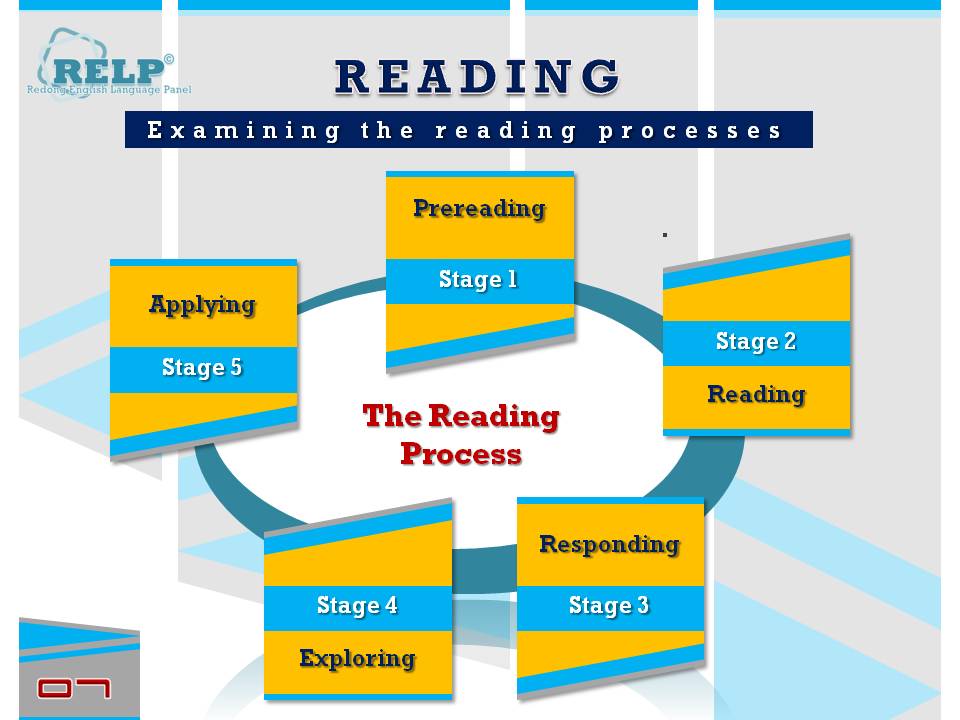
To all English Language Panels, here is a note in Reading Process that you can read and apply in your classroom. This e-book publication is a part of Redong English Language Panel Blueprints to empower the teachers, and as part of our Professional Learning Community programmes. Please read and download these materials and the presentation will be on our next Learn English Together (LET), to further discuss and share ideas.

Download e-book in .pdf format here :

Reading Process - Literacy in the 21st Century

Reading Process
Literacy in the 21st Century